Most construction subcontractors operate without a dedicated CFO. According to The Expert CFO, a full-time CFO typically costs $150,000–$250,000 per year — a figure that puts the role out of reach for most sub businesses under $10 million in revenue.
That creates a gap. The owner, a project manager, or a part-time bookkeeper ends up handling financial management alongside their primary responsibilities. Financial decisions often become reactive rather than proactive: problems surface only after they have already affected the bottom line.
A growing category of AI-powered financial tools — sometimes called "AI CFO" platforms — aims to close that gap by automating the routine work a CFO's office handles and surfacing the financial intelligence that informs better decisions. Here is what these platforms do, how they compare to traditional options, and what subcontractors should consider before adopting one.
The CFO role in a construction business covers a wide range of functions: bookkeeping and transaction coding, cash flow forecasting, financial reporting, WIP schedule preparation, bonding support, and strategic financial planning. In larger companies, a CFO and supporting staff handle all of this. In a typical 20–80 person sub business, these tasks are split across multiple people — often an external accountant or bookkeeper handling the ledger, and the owner making financial decisions based on incomplete or delayed information.
The global virtual CFO market is projected to grow from $4.7 billion in 2026 to over $10 billion by 2035, reflecting how widespread this gap is across industries. Construction, with its project-based accounting complexities, feels it particularly acutely.
An AI CFO platform automates the repeatable portions of financial management — transaction categorization, bank reconciliation, invoice processing, cash flow modeling — while providing dashboards and reports that support decision-making. It does not replace strategic financial thinking. It does not negotiate with bonding companies or advise on entity structuring. What it does is handle the volume of day-to-day financial processing that, in most sub businesses, either falls behind schedule or consumes disproportionate staff time.
Think of it as the operational layer that keeps financial data current and organized, so that when strategic decisions need to be made — whether by the owner, an external accountant, or a part-time CFO — the underlying data is accurate and timely.
The value proposition is straightforward: a sub with $5 million in revenue likely cannot justify a full-time CFO, but the financial complexity of managing multiple jobs with different billing cycles, retainage terms, and payment schedules demands CFO-level visibility. AI bridges that disconnect.
The foundation of any AI CFO platform is automated transaction categorization. As bank transactions, credit card charges, and invoices flow in, the system codes each one to the appropriate job, cost code, and general ledger account. According to LayerNext, modern AI bookkeeping systems use multi-agent architectures that continuously categorize transactions, reconcile accounts, and work toward closing books automatically.
For construction subs, the key differentiator from generic AI bookkeeping is job-level coding. Every transaction needs to map to a specific project and cost category. Platforms built for construction — like Cru and Adaptive — understand this requirement natively, whereas generic tools often need manual configuration or add-ons.
In practice, this means month-end close can happen in days rather than weeks, and job cost reports reflect current data rather than last month's numbers.
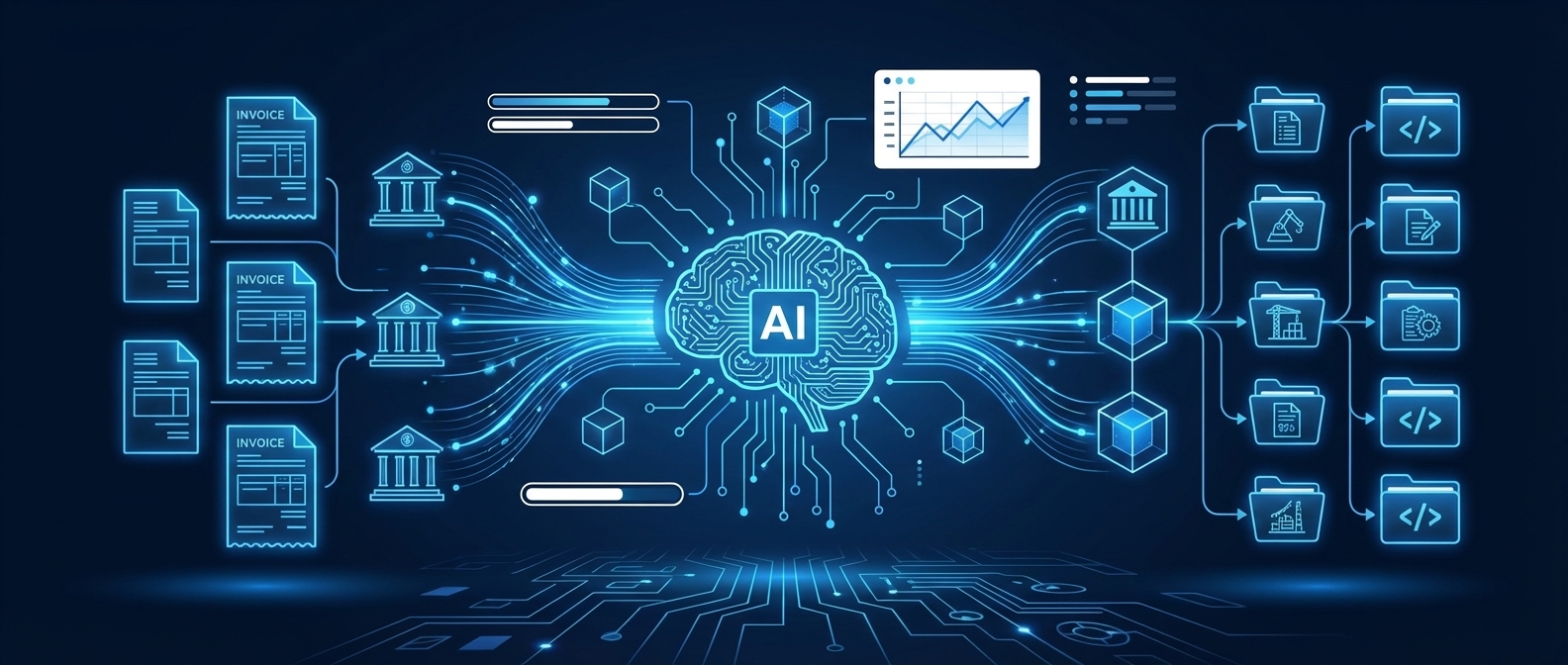
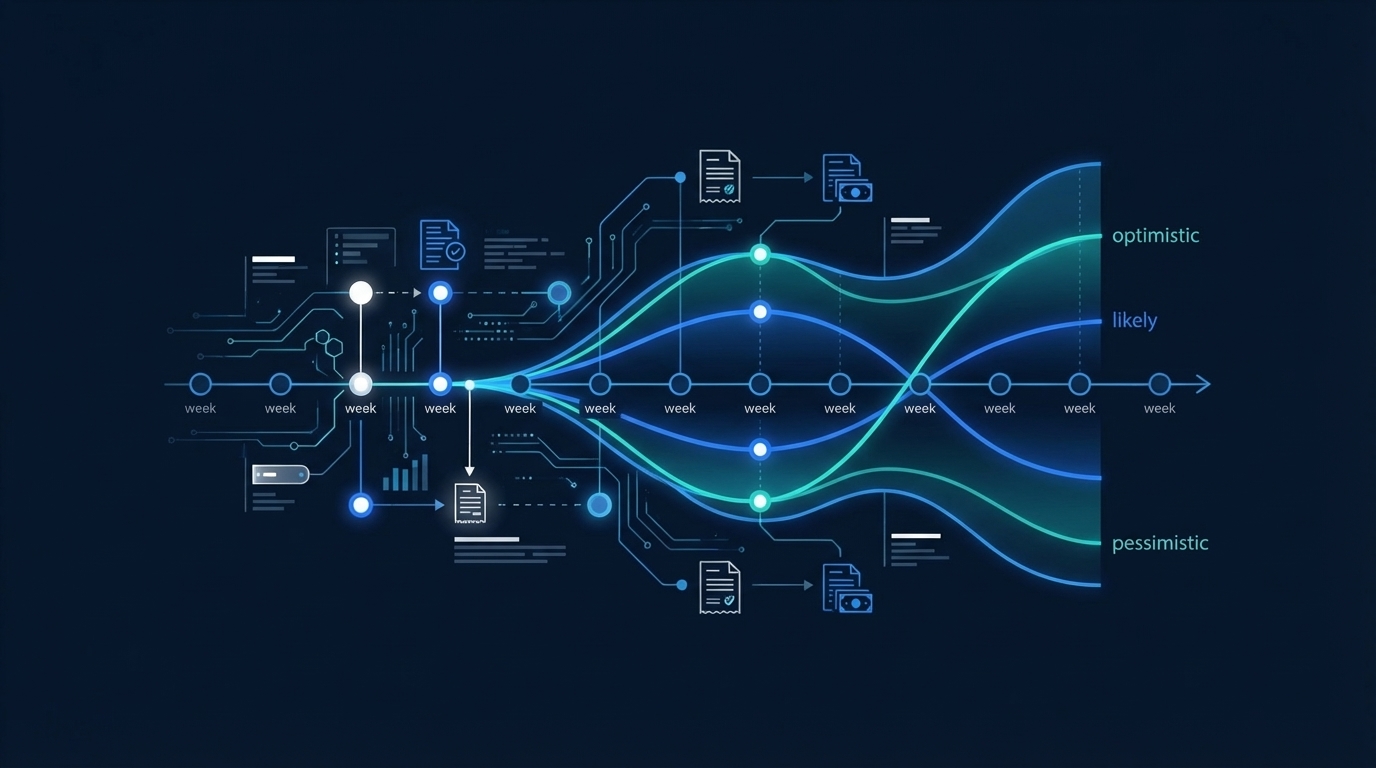
Cash flow forecasting is where AI adds the most value for subcontractors. Rather than relying on spreadsheet-based projections updated weekly or monthly, an AI CFO platform builds predictive models based on your actual project pipeline, historical payment patterns, and current receivables and payables.
The output is typically a rolling 13-week (or longer) cash flow forecast that updates as new data comes in. Some platforms offer scenario analysis — for example, modeling what happens to your cash position if a specific GC pays 15 days late, or if you win a pending bid.
For subs managing multiple concurrent projects with different billing cycles and payment terms, this kind of forward-looking visibility can surface potential cash shortfalls weeks before they become urgent. A 2024 report from Mobilization Funding found that 43% of subcontractors report not having enough working capital to cover unexpected expenses or project delays. A rolling forecast that updates daily, rather than a spreadsheet updated monthly, changes the nature of that risk.
Standard outputs from an AI CFO platform include real-time profit and loss statements, balance sheets, WIP schedules, and job profitability dashboards. The difference from traditional accounting software is timeliness and automation. Reports reflect today's data, not last month's close. And they are generated automatically rather than requiring someone to build them manually.
Some platforms also include trend analysis and benchmarking — comparing your current job margins, overhead rates, and cash conversion cycles against your own historical performance or industry benchmarks.
The choice between an AI CFO, a part-time controller, and a full-time CFO depends on company size, complexity, and what financial functions are most critical.
| Option | Cost | Best for |
|---|---|---|
| Full-time CFO | $150,000–$250,000/year | Subs above $15–20M in revenue or complex multi-entity structures |
| Part-time / fractional controller | $2,000–$5,000/month | Mid-size subs needing human judgment on financial strategy |
| AI CFO platform | $200–$500/month | Small to mid-size subs ($2–15M) that need current, organized financial data |
Many subs find the most effective setup is a combination: an AI platform handling the daily volume and producing clean, current reports, paired with a quarterly or monthly review from an experienced construction CFO or controller who can interpret the data strategically.
The key question is not "which one should I pick?" but "which financial functions are falling through the cracks today?" If the answer is mostly operational — books are behind, cash flow is unclear, reports are stale — an AI CFO platform addresses those issues directly. If the answer is strategic — need help restructuring debt, navigating a bonding increase, or evaluating an acquisition — you need human expertise regardless.
For many subs in the $2–15 million revenue range, the combination approach delivers the most value per dollar: AI for the daily grind, human advisor for the quarterly strategy sessions.
The onboarding process for most AI CFO platforms follows a similar pattern. You connect your bank accounts and existing accounting software. The AI begins categorizing historical transactions and learning your specific vendors, job structures, and coding patterns.
Within the first one to two weeks, you should have a baseline financial picture — accounts reconciled, transactions coded, and an initial cash flow forecast generated. By day 30, the system has processed enough of your data to produce reliable job cost reports, cash projections, and financial dashboards. At this point, you can evaluate whether the platform's automated coding aligns with your chart of accounts and make adjustments as needed.
The ROI of an AI CFO platform typically shows up in three areas:
Most platforms offer trial periods or demo environments. Testing with real data — even a subset of your transactions — is the best way to evaluate fit before committing. It is worth noting that AI CFO platforms are not set-and-forget tools. Like any financial system, they require initial configuration (chart of accounts mapping, job structure setup) and periodic review to ensure coding accuracy stays high. The time investment is front-loaded — plan for a few hours during onboarding — but substantially less than maintaining a manual system over time.
AI CFO platforms handle routine transaction coding with high accuracy — typically 95% or higher for recognized vendors and transaction patterns. However, most subs find it more practical to keep a bookkeeper or accountant on staff (or on retainer) for exception handling, strategic tasks, and human oversight. The AI handles volume; the human handles judgment.
Indirectly. Bonding companies evaluate your financial health based on your financial statements, WIP schedules, and cash position. An AI CFO platform that keeps these reports current, accurate, and readily available makes the bonding process smoother. It does not replace the relationship with your bonding agent, but it ensures the financial data supporting your application is solid.
Most AI CFO platforms designed for construction integrate with common systems including QuickBooks, Sage, and Foundation Software. Some, like Cru, also integrate with construction-specific platforms like Procore, GCPay, and Textura. Before committing, verify that your specific accounting software and version are supported.
Ready to see what AI-powered financial management looks like for your business? Explore Cru — built specifically for construction subcontractors who need CFO-level visibility without the CFO-level cost.


